
Table of Contents
How Long Is a Standard Picnic Table?
The classic commercial picnic table seats six to eight adults comfortably. In the U.S., the accepted standard is a 6-foot (72-inch) tabletop length, which offers enough surface area for a full group without becoming unmanageable in tight outdoor areas. This is the size you'll find in most parks, campgrounds, and school lunch areas across the country, and it's the baseline we use when customers ask how long a standard picnic table should be.
That said, "standard" is a starting point, not a ceiling. Depending on your site, you may need to go larger or smaller or accommodate ADA accessibility requirements. Knowing the baseline helps you figure out exactly what you need.
Picnic Table Dimensions at a Glance
Here's a quick reference for the dimensions you'll encounter most often with a standard commercial picnic table:
| Measurement | Standard Dimensions | Notes |
| Picnic table length | 72 inches (6 ft) | Most common commercial size; seats 6–8 adults |
| Picnic table width | 54–58 inches | Measured across the full table, including bench overhang |
| Standard picnic table height | 28–30 inches | Tabletop surface height from ground |
| Bench height | 17–18 inches | Seat surface height from ground |
| Bench length | 72 inches (6 ft) | Typically matches table length |
| Clearance (seat to table underside) | 10–12 inches | Affects comfort for larger users |
These picnic table dimensions are the result of decades of refinement to suit adult users who eat or work at a table. The 28- to 30-inch tabletop height pairs comfortably with 17- to 18-inch bench seating, giving users enough leg clearance and elbow room without straining to reach the surface.
Beyond the Standard: Other Sizes To Know
The 6-foot table is a strong default, but commercial buyers often have sites that call for something different. Here's where the standard picnic table dimensions serve as a reference point for comparing other options:
- Hexagonal tables: These tables feature a circular footprint of approximately 6 feet in diameter, giving guests a shape that encourages face-to-face conversation and fits naturally into circular gathering areas, courtyards, and central pavilion spaces. Bright Idea Shops was the original creator of the hexagonal picnic table made from recycled plastic lumber, a design that has since become a staple across parks, schools, and other public spaces nationwide.
- 8-foot tables: Popular in high-traffic parks and campgrounds where larger groups gather. Choices like the 96" Park Avenue Picnic Table seat eight to 10 adults and require more clearance on all sides.
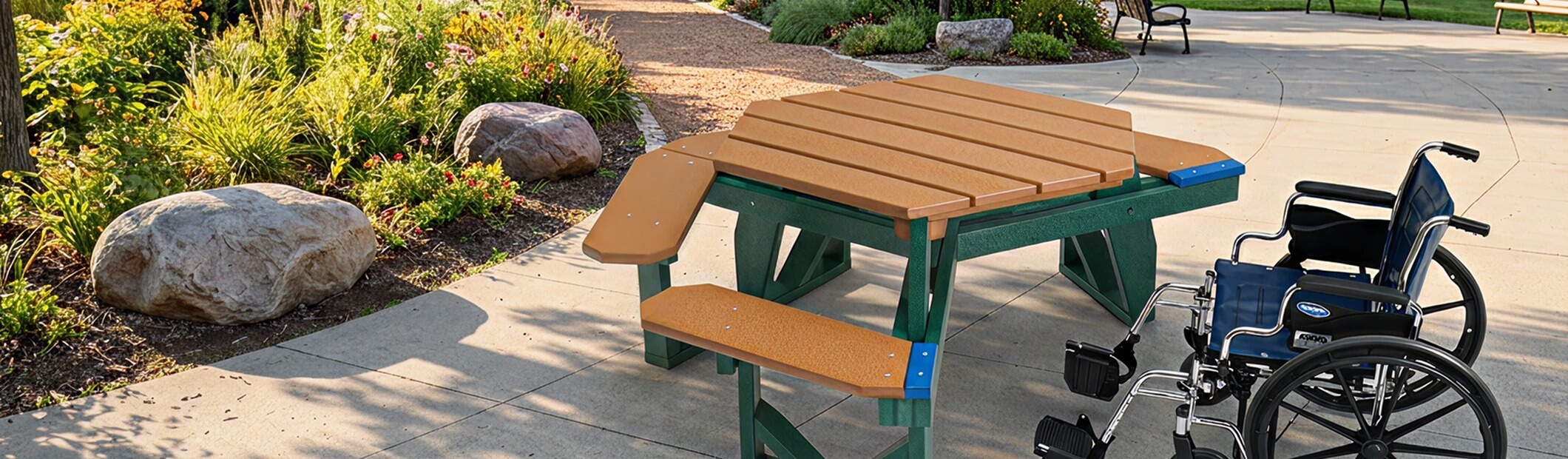
- ADA-compliant tables: These tables maintain a standard picnic table height but include an end or side extension with no attached bench, allowing wheelchair access. The accessible position requires a clear floor space of 30 inches by 48 inches, knee clearance of at least 27 inches high and 30 inches wide, and leg clearance extending 19 inches under the table. View our ADA picnic table options.
- Children's tables: Scaled-down versions used in school playgrounds and youth programs, typically 20 to 24 inches in height.
- Bar height tables: At 40 to 42 inches tall, bar height tables suit brewery patios, resort pool decks, and outdoor bars where guests prefer a stool-height experience.
Understanding these size variations lets you mix table types across a larger property, placing standard tables in the main picnic area, ADA tables near accessible pathways, and smaller tables in a dedicated kids' zone.
Planning Your Space Around Picnic Table Size
Knowing the picnic table dimensions is only half the equation. The other half is figuring out how those dimensions interact with your available square footage.
A standard 6-foot picnic table occupies a footprint of roughly 6 feet by 5 feet. But users need room to enter and exit from the benches. Plan for at least 3 feet of clearance behind each bench. That puts the practical space requirement for a single standard table at around 6 feet by 11 feet. In a 20x20 pavilion, for example, you can typically fit four to six tables with comfortable circulation, depending on layout.
For parks departments and recreation managers planning large installations, spacing tables 8 to 10 feet apart (center to center) creates a natural flow that keeps the space from feeling crowded, accommodates stroller traffic, and makes cleaning and maintenance far easier.
Restaurants and hotel patios may want tighter spacing for a livelier atmosphere. Just make sure the chosen picnic table width doesn't create a pinch point near doors or service pathways. Always check local fire codes and ADA clearance requirements before finalizing your layout.
Find the Right Picnic Table for Your Property
Our team at Bright Idea Shops helps parks departments, schools, restaurants, hotels, and dozens of other commercial clients spec the right tables for their exact space and usage needs. Browse our full selection of commercial picnic tables, including standard, ADA-accessible, and custom options, and we'll help you plan your layout from the ground up.
Shop All Commercial Picnic TablesFrequently Asked Questions About Standard-Size Picnic Tables
What material works best for standard-size picnic tables in public spaces?
Recycled HDPE (high-density polyethylene) plastic lumber is one of the top choices for commercial public spaces. Unlike wood, it doesn't rot, splinter, or absorb moisture, and it holds color without paint or stain. It handles heavy daily use and resists graffiti better than untreated wood. At Bright Idea Shops, our commercial tables use recycled plastic lumber throughout, making them a low-maintenance choice for parks, campgrounds, and other high-traffic sites.
How do I clean and maintain a recycled plastic picnic table?
Recycled HDPE picnic tables are among the easiest commercial furniture products to maintain. For routine cleaning, soap and water or a mild all-purpose cleaner are all you need. Tougher stains, like grease, tree sap, or paint, typically respond to a nylon scrub brush with a diluted bleach solution or a commercial plastic cleaner. Unlike wood, HDPE doesn't require sealing, staining, or painting at any point in its lifespan. Power washing is safe for most recycled plastic tables and makes quick work of grime after a busy season. Inspect fasteners annually and tighten as needed, since hardware is the primary maintenance point throughout the table's life.
Are picnic tables with attached benches or detached benches better for commercial use?
Attached benches are the standard for commercial outdoor spaces because they stay put, require no additional anchoring, and give users a predictable, stable seating experience. They're also harder to steal or vandalize. Detached benches offer more flexibility because they can be repositioned for events or to accommodate larger groups. But they add a logistical layer in high-traffic sites where furniture tends to wander. For most parks, schools, and campgrounds, attached-bench tables are the practical choice.
Articles Related to Outdoor Picnic Tables
High-density polyethylene is among the most common variations of plastic.
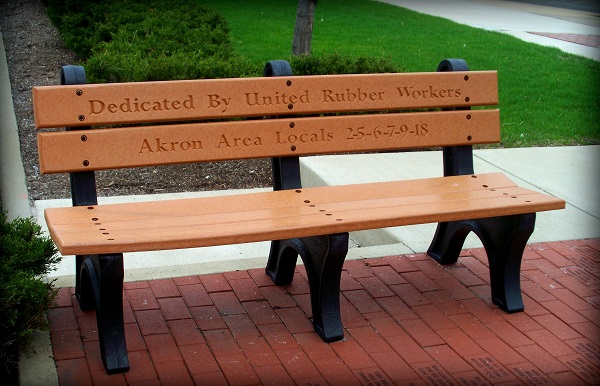
At Bright Idea Shops, we started making memorial benches to fulfill a simple request.
You want your picnic tables to look good year after year but not take a full-time staff to manage.